Moving from checklists to culture
Schools today are buzzing with activity- learning, events, visitors, ongoing construction, new teachers, old expectations, and the endless rhythm of the academic calendar. In the middle of this, school safety often slips into one of two extremes:
Over-simplified “We have drills, we’re fine.”
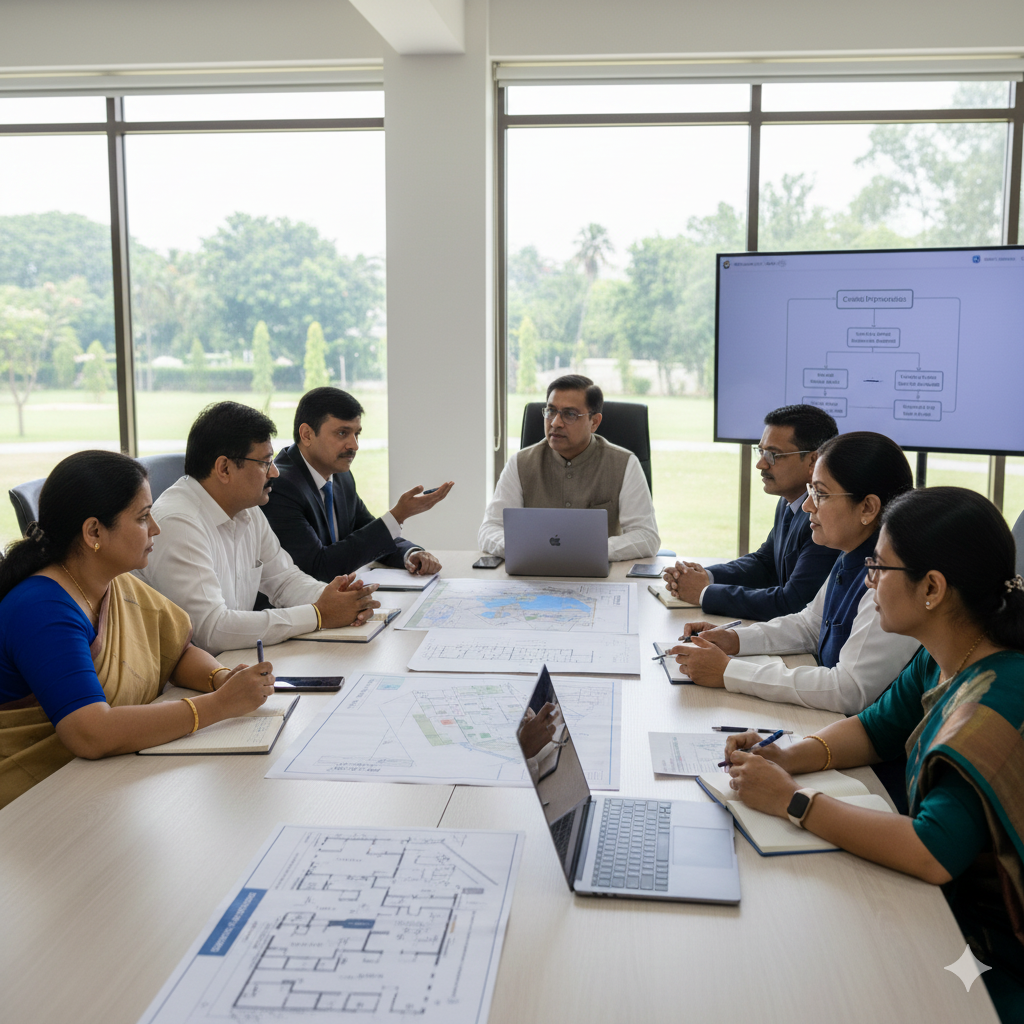
Overwhelming “There’s too much to do; where do we start?” What most schools are missing is not another checklist… but a thinking space. A structured pause. A place where leaders and administrators can step back, reflect, and make thoughtful, strategic decisions about safety, culture, and preparedness.
At Golden Circles Consultancy, we call this the Deliberation Station
Why Schools Need Reflection, Not Just SOPs?
Most school safety issues don’t come from a lack of documents. They come from:
- Unclear responsibilities
- Inconsistent communication
- Assumptions about readiness
- Overconfidence in system
- Outdated procedures
- Lack of training or practice
- Reactive decision-making
A Deliberation Station creates space to explore these gaps — gently but honestly. It moves schools from compliance-driven safety to culture-driven safety. And that’s where the real transformation happens.
What Is the Deliberation Station?
t’s a simple but powerful reflective tool designed to help schools ask the right questions before taking action:
1. Does this decision truly make students safer?
2. Are our people ready, trained, and confident?
3. Do our systems support this, or will they collapse under pressure?
4. Are we prepared, or are we assuming we’re prepared?
The Deliberation Station helps leaders shift from: “What should we do?” “Why, how, and with what impact?”→ It is not a checklist. It is a thinking framework- because safety is a culture, not a formality.
Introducing the Safety Readiness Quiz
To accompany the Deliberation Station, GCC has created a short, engaging School Safety Readiness Quiz.
It takes less than 60 seconds.
Leaders and administrators simply mark: Yes / Partly / No / Not Sure across statements related to:
1. Culture
2. Infrastructure
3. Training
4. Leadership
The results are revealing. Most schools discover that:
“We thought we were ready… but there’s a lot we haven’t looked at.” And that’s the purpose- awareness before action.
A Culture of Pause, Not Panic
When schools create structured reflection time around safety, something shifts.
Staff start noticing risks earlier.
Students participate more consciously.
Leaders make decisions with clarity instead of urgency. Safety becomes woven into the school’s daily life — not limited to drills and audits.
A Deliberation Station helps schools practise the habit of intentional safety. Because schools don’t become safer by accident. They become safer by design.
A Free Preview for Schools
As part of our commitment to strengthening safety culture across India’s schools, GCC is sharing a 1-page preview version of the Deliberation Station. The full version — with 30+ reflective prompts, implementation templates, and team discussion guides — is available through our:
1. School Safety Audit
2. Staff Safety Training
3. Annual Partnership Program
Everybody Safe, Every Day — that’s the GCC promise.
Deliberation Station
Reflection isn’t limited to one moment, it can shape the start, steady the middle, or strengthen the end of any safety discussion. The questions in this preview are drawn from a comprehensive set of 30 prompts that leaders can use at any stage of their safety journey supporting the development of a stronger safety culture.
| No. | Reflective Prompts |
|---|---|
| 1 | Does this safety initiative align with our school’s mission, ethos, and long-term educational goals? |
| 2 | Are we prioritising student wellbeing, a culture of care, and preparedness—not just compliance or optics? |
| 3 | Do we have a clear understanding of our school’s current risk landscape (physical, behavioural, cultural)? |
| 4 | Have recent incidents, community concerns, or environmental changes informed our decision? |
| 5 | How will this decision strengthen a culture of vigilance, responsibility, and safety ownership among staff and students? |
| 6 | Will this support or strain staff morale, workload, or confidence? |
| 7 | Does this change enhance students’ sense of safety, agency, and belonging? |
| 8 | Are our existing systems, protocols, and SOPs aligned with the new initiative—or will changes be required? |
| 9 | Do our facilities, equipment, and digital systems support the initiative? |
| 10 | Are our communication plans clear, transparent, and trust-building? |
| 11 | Does this safety initiative align with our school’s mission, ethos, and long-term educational goals? |
| 12 | Have relevant staff been informed clearly and on time? |